The Husqvarna Automower 305, 310, 315X, 405X, 410 iQ, and 415X are among the most well-known robotic mowers for small to medium private gardens. On paper, many of these models appear very similar: compact design, rotating cutting disc with small blades, app connectivity, and depending on the generation, boundary wire, GPS support, or virtual boundary.
In practice, however, it is not only the specified square meterage that matters. Many users report that setup, wire laying, station, firmware version, app connection, and the condition of the blades and cutting disc determine whether the Automower quietly makes its rounds or constantly stops with error messages.
This article is deliberately not a promotional brochure. Messerscheibe24 does not sell robotic mowers, but rather accessories and spare parts related to blades, cutting discs, mowing plates, and blades. The assessment here comes from a maintenance and practical perspective: What works well, where do complaints accumulate, and when is it worth taking a closer look at the cutting system, installation, and spare parts supply?
Husqvarna Automower 305, 310, 315X, 405X, 410 iQ, and 415X: Which model for whom?
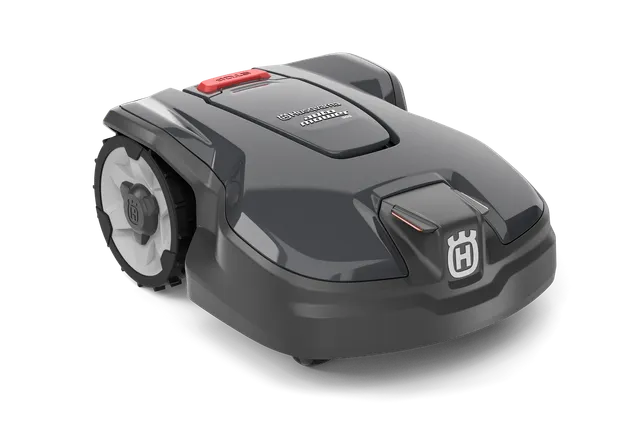
In this model group, one must first separate the generations. The 305, 310, and 315X are classic wired Automowers with boundary wire and search cable. The 315X was long the more comfortable X-Line variant with GPS support, app features, and higher area performance. The 405X and 415X are newer successors in the same size range, also with wire installation, but with more modern app and comfort features. The 410 iQ, on the other hand, belongs to the newer wireless iQ/EPOS world with virtual boundaries.
Important: In forums, the designations are sometimes abbreviated. When users talk about 405 or 415, they often mean 405X or 415X. In current user reports, the 410 often refers to the 410 iQ, so not a simple wired mower, but a model with virtual boundary and satellite-supported navigation.
For simple, rectangular areas, the manufacturer’s specifications can be relatively accurate. In convoluted gardens, with multiple zones, narrow passages, many trees, slopes, long return paths to the station, or difficult edges, however, one should plan for reserves. A model that theoretically handles 600 m² can quickly feel overwhelmed in a complicated 500 m² garden. A 1,500 m² model is often more sensible on 1,200 m² with many bottlenecks than a smaller device at its limit.
Key Data in Practice
| Model | Typical Area Class | Navigation / Boundary | Strengths | What Users Should Pay Attention To |
|---|---|---|---|---|
| Automower 305 | small to medium gardens, approx. 600 m² manufacturer class | Boundary wire, search cable, Bluetooth/App depending on model | compact, agile, sufficient for simple gardens | Plan station and search cable carefully; Bluetooth issues have been reported multiple times |
| Automower 310 | medium gardens, older proven series | Boundary wire and search cable | long runtimes with manageable maintenance for many owners | Check age, wire condition, charging station, circuit boards, and wheel motors |
| Automower 315X | medium to larger private gardens | Wire system with GPS support and app connection | good mowing pattern, many comfort features, often available used | Carefully check app connection, GPS status, battery, wheel motors, and service history |
| Automower 405X | smaller to medium gardens | Wire system, newer X-Line features | modern app features, more comfortable than simple base models | Evaluate reports of early failures and moisture issues cautiously, but take seriously when purchasing |
| Automower 415X | medium gardens up to approx. 1,500 m² manufacturer class | Wire system, app, GPS assistance, FOTA depending on market/equipment | strong features, good area reserve, comfortable operation | Frequently discussed: “Cutting system blocked” despite clean mowing deck |
| Automower 410 iQ | medium areas, wireless target group | virtual boundary, EPOS/GPS-supported navigation | no classic boundary wire, systematic patterns possible, good cutting quality according to user reports | Realistically plan for satellite reception, mapping, trees, house walls, and edge issues |
As a rule of thumb from practice: Those with a simple garden and clear lawn edges can plan smaller. Those with narrow passages, islands, multiple lawn areas, curbs, trees, and shady corners should think one class higher and invest more time in the setup.
The most common real problems from user reports
User reports repeatedly highlight the same groups of problems. Particularly noticeable is the message “Cutting System Blocked.” Several owners of the 415X, 315, and partially the 310 Mk2 describe that the mower stops, even though the cutting disc, blades, and underside have been cleaned. This is especially frustrating for those affected, as the error does not seem like a real mechanical blockage.
In discussions, a connection with firmware or software is often suspected. Some users report that cleaning, a higher cutting height, or new blades have helped. Others write that only a later update resolved the issue. From a maintenance perspective, this means: First check mechanically, but do not hastily accept a defective cutting motor if the mower deck rotates freely and the error occurs more frequently after an update.
The second major issue is connection technology. Users of the 315X report frozen app values: position does not move, battery level remains static, and later the mower is empty on the lawn. In the case of the 305, there are instances where Bluetooth pairing fails despite deleted user and device settings. Automower Direct is also described in user reports as delayed, unreliable, or needing a restart.
With the 410 iQ, the reports are mixed. One user praises the app, mowing quality, and virtual boundary, but mentions the GPS or satellite lock as a real weak point. With weak reception, the mower sometimes needs to be driven via Bluetooth to a more open location. This is not a classic defect, but an important point for gardens with trees, house walls, courtyards, or heavy shading.
Hardware defects are also described very specifically: wheel motors, power supplies, sensors, circuit boards, charging stations, and batteries. A 315X owner reports several repairs over the years with high additional costs. Another user mentions repeatedly replaced circuit boards in the charging station for the 310, possibly due to short circuit or moisture influence. Such reports do not mean that every device is problematic. However, they indicate which components should be monitored in used devices and after the warranty period.
Another point is moisture. In German-speaking forums, there are indications of moisture damage in the 405X/415X as well as individual cases of water ingress in the 305. The evidence here is not broad enough to derive a general weakness. Nevertheless, one should pay attention to clean seals, proper cleaning without high pressure, dry storage in winter, and a sensibly placed charging station for every Automower.
Installation matters: boundary wire, search cable, charging station, and corridor width
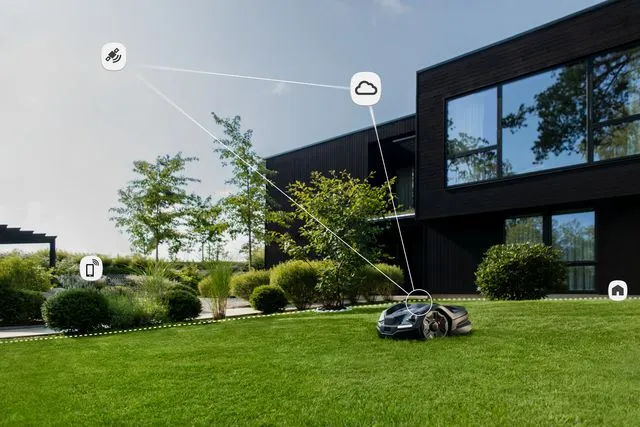
Especially with the 305, 310, and 315X, installation is more important than many beginners expect. These models are not just “set and forget.” The boundary wire defines the working area, the search cable leads the mower back to the station, and the charging station sends its own signals. If distances, corridors, or signal strengths are not correct, the robot quickly appears “dumb,” even though the installation is actually the cause.
A typical user problem: The mower gets stuck near the station, drives in small circles, or maneuvers repeatedly at the same spot. In discussions, it is often suspected that the robot misinterprets the station signal or that the boundary and search cables are too close together. A signal strength that is too high from the station can also be problematic if it causes the mower to switch to search logic or maneuvering behavior too early.
Practically, this means: The station needs sufficient free space in front. The search cable should not be squeezed through narrow passages right next to the boundary wire. In narrow passages, the corridor must be chosen so that the mower does not always follow the same path and does not create tracks in the lawn. For angular gardens, a sketch before installation is worthwhile.
In a user report about the 315X, it was described that the mower occasionally ignored the boundary wire and drove towards the street. Later, cable breaks and corrosion on the installed wire occurred. Such cases show: It’s not just the device that matters, but also the quality of the cable, the connectors, and the installation. Thin, poorly protected, or aged wire can cause more trouble after a few years than the mower itself.
Anyone taking over a used property with an existing Automower installation should not trust the wire blindly. A wire test, visual inspection of the connectors, checking the station, verifying the search cable position, and a real trial run over several mowing cycles are sensible. An Automower that worked well on a simple area with the seller may still constantly search, turn, or stop in a complicated garden.
App, Firmware, and Updates: What Really Annoys Users
App convenience is nice as long as it works. However, with the 315X, users report frozen GPS positions, stationary battery levels, and error messages in the app. This is particularly frustrating when the robot appears to be working according to the app but is actually standing somewhere on the lawn with a dead battery.
With the 305 and 315X, Bluetooth and pairing issues arise. Users describe that the device is visible in Bluetooth lists, but is not properly connected in the app. Deleting old pairings, user accounts, or device settings apparently does not always help immediately. In such cases, one should proceed systematically: update the app, restart the smartphone, remove old Bluetooth devices, restart the mower, reduce distance, and check if another user is already connected.
For newer models with firmware-over-the-air, the update topic is a double-edged sword. On one hand, errors such as incorrect blockage messages or connection problems can be resolved via software. On the other hand, users report that certain issues only occurred more frequently after updates. Therefore, it makes sense to document the software version before making multiple changes at once.
If a dealer update is necessary, local service suddenly becomes important. Several users describe frustration over long distances to the dealer, lack of technical contacts, or dealers who are reluctant to take on Automower service. Therefore, anyone buying a used 315X, 405X, or 415X should not only ask about operating hours but also: Who services the device nearby? Is there diagnostic access? How long do repairs take during the season?
Maintenance and Repairs: What Can Break After 2–5 Years
The normal maintenance for these robotic mowers is manageable: clean the underside, change the blades, check the screws, keep the charging contacts clean, remove grass debris from the wheels, keep an eye on the battery, and check the installation. Many users actually report years of operation with little effort, as long as the blades, wire, and station are in order.
The wear parts of the cutting system should not be underestimated. Dull blades tend to tear grass, the mower requires more power, and the cutting pattern becomes ragged. In case of error messages like “Cutting system blocked,” one should first check if the blades can move freely. Small blades must be able to pivot; stuck screws, hardened grass debris, or damaged blade discs can affect the operation.
Those who want to improve the cutting pattern or increase blade protection can use a suitable blade disc with 6 blades and protection instead of the original simple disc for compatible Husqvarna Automower 305, 310, 315X, 405, 410, and 415. It is always important to check compatibility, turn off the mower, wear safety gloves, and tighten the screws correctly.
In case of denser growth or when a particularly even cut is desired, a 7-blade cutting disc can be an interesting alternative. More blades also mean: The disc must stay clean, the blades must swing freely, and the cutting height should not be set too low when the grass is wet, uneven, or very dense.
For users looking for a very fine cutting pattern and who regularly maintain their mower, a 9-blade cutting disc is also an option. However, especially in the case of error messages, one should not simply mount “more blades” and hope that software or motor problems will disappear. It must first be clear whether the cause is mechanical, electrical, or software-related.
After a few years, other components become more relevant. User reports mention wheel motors, boundary sensors, cutting motors, batteries, power supplies, and circuit boards. A typical symptom is: The mower still moves, but the blades no longer turn. This can range from a blocked cutting system to a defective cutting motor to issues with the electronics. Without an error message, diagnosis is often more difficult.
The charging station is not just a passive parking spot. Circuit boards, contacts, power supply, and wiring can fail. Moisture, snails, corrosion, and power surges after thunderstorms are frequently mentioned as concerns in user reports. Therefore, a weather-protected but not completely airtight location, clean contacts, and surge protection in thunderstorm regions are worthwhile considerations.
Mowing Results, Edges, and Remaining Work: Where the Automower Excels — and Where It Doesn’t
When an Automower is set up correctly, the 305, 310, 315X, 405X, and 415X usually deliver exactly what many owners appreciate: a consistently short, even lawn without visible mowing schedules. Instead of cutting a lot once a week, the robot continuously trims small tips. The cuttings remain as fine mulch.
Many positive user reports revolve around this. A 310 owner describes several years of operation with almost no maintenance other than cleaning, blade replacement, and occasional wire repairs. A 315X user reports seven years of satisfactory use, despite battery and wheel motor replacements. This shows that the devices can perform well for a long time if the garden, installation, and maintenance are appropriate.
However, an Automower does not replace all manual labor in every garden. Users mention strips along roads, ditches, flooded areas, sticks, leaves, very high seasonal start grass, and edges as typical remaining tasks. Curbs and wall edges remain particularly challenging because the mower cannot drive too far over the edge. Otherwise, there is a risk that it will get stuck, slip, or fail to find its way back.
For the cutting image, sharp blades are more important than many additional functions. When the grass tips turn whitish, the blades appear torn, or the mower cuts louder than usual, the blades are often dull or dirty. In sandy soils, many branches, fallen fruit, or cones, blades wear out significantly faster than in a clean ornamental lawn.
A good maintenance rhythm is therefore: visual inspection of the underside every one to two weeks, check that the blades are freely movable, remove grass wraps, check screws, and regularly replace blades depending on lawn conditions. Those who let the robot operate in very short grass should also ensure that the blade disc does not constantly touch uneven ground.
410 iQ and wireless models: freedom without wires — but not without effort
The 410 iQ sounds like the solution to all wire problems for many buyers. No need to bury a boundary cable, no cable breaks, no corroded connectors. Positive user reports praise the very good cutting quality, quiet operation, push notifications, easy scheduling, and precisely adjustable virtual boundaries.
At the same time, going wireless does not mean worry-free. The mapping must be done carefully. Open boundaries, flat paths, beds, dark lawn edges, or visually unclear transitions must be prepared in the app as virtual boundaries, no-go zones, or work areas. Those who expect the mower to automatically understand every garden situation will be disappointed.
The most important point about the 410 iQ is reception. Satellite and GPS-based systems prefer an open view of the sky. House walls, dense tree cover, high hedges, courtyards, narrow townhouse gardens, or heavily shaded areas can lead to positioning problems. Users report that the mower sometimes needs to be manually driven via Bluetooth to a more open area when the signal is weak.
The edge remains a topic of discussion. One user describes that a narrow strip is left at a curb edge because the mower cannot drive far enough over the edge without risking problems when returning. This is not a specific Husqvarna error, but a fundamental issue with many robotic mowers: The blade area is not positioned all the way outside the housing for safety reasons.
One report about a new 410 iQ mentions a loud metallic grinding noise right during setup, possibly in the area of the blade disc or screws. This should not be generalized, but taken seriously. In case of metallic grinding, the rule is: stop immediately, check the underside, transport lock, blade screws, blade disc, and foreign objects. A new mower should not run with a grinding noise permanently.
Buying Guide: New, Used, or Dealer Device?
When buying new, the 405X, 415X, and 410 iQ are particularly interesting if app features, modern operation, and availability of updates are important. When buying used, the 310 and 315X often seem attractive because many devices are on the market and the basic technology is well-known. However, the price advantage can quickly disappear if the battery, wheel motor, station, or wire installation need to be replaced.
Before purchasing a used mower, one should not just briefly turn it on. A complete test run is better: starting from the station, mowing, returning via search cable or virtual route, charging, app connection, error memory, noises at the cutting system, and condition of the underside. Especially with the 315X, one should test GPS/app functions and check if the values are plausibly updated.
Ask about operating hours, purchase date, winter storage, battery replacement, motor replacement, repairs, invoices, and software status. A very cheap 315X with an unknown history can end up being more expensive than a well-maintained dealer device. Conversely, an older 310 with documented maintenance and simple garden installation can run reliably for many years.
The local service is a real buying point. User frustration often arises not only from the defect itself but also from long distances to the dealer, lack of diagnosis, long spare part times, and high repair costs. Those who rely on the robot during the season should clarify beforehand which dealer actually repairs Automowers and does not just sell them.
For the decision between the 315X and 415X, it applies: The 415X offers more modern features and more comfort, but has also been discussed in user reports regarding firmware and early series issues. The 315X is older but known and often cheaper used. The condition, service history, and garden shape are crucial, not just the model year.
Frequently Asked Questions
Why does my 415X or 315 report “Cutting system blocked,” even though nothing is blocked?
First, the blades, screws, cutting disc, grass clippings, and the underside should be checked. If the blades turn freely and no mechanical blockage is visible, firmware may also play a role. Many users report that the error occurred more frequently after updates or disappeared later through an update. Therefore, document the software version and do not hastily suspect only the cutting motor.
How do I get a stable Bluetooth or app connection with the 305 or 315X?
Delete old pairings on the smartphone, update the app, restart the mower, and pair as close to the device as possible. If that is not enough, check user accounts, Automower Direct, and already connected devices. For frozen app data, systematic narrowing down often helps: consider the app, mobile/GPS module, software version, and mower status separately.
Why can’t my Automower find the charging station?
It is often due to the installation: search cable poorly routed, boundary wire too close, corridor too narrow, station poorly placed, or station signal inappropriate. Especially if the mower keeps circling or hanging in the same spot, the geometry around the station and search cable should be checked.
Is the 410 iQ really reliable without a boundary wire?
In open areas with good satellite reception, users report very good results. However, in gardens with trees, house walls, shady areas, or complicated edges, the 410 iQ requires careful mapping and possibly adjustments to virtual boundaries. Going wireless saves wiring work but does not replace a clean setup.
What maintenance is most important for the cutting system?
The blades must be sharp and freely movable. Grass residues, stuck screws, and damaged cutting discs worsen the cutting pattern and can promote error messages. Regular visual inspection, cleaning, and timely blade replacement are more important than rare large maintenance actions.
Conclusion: Good Automowers — when garden, setup, and maintenance fit
Husqvarna Automower 305, 310, 315X, 405X, 410 iQ, and 415X can work very convincingly in the right garden. They are praised for quiet operation, even cutting pattern, ease of daily life, and in some devices, many years of reliable use. Especially the 310 and 315X show that long runtimes are possible.
However, user problems also clearly show the limits: error messages in the cutting system, app and Bluetooth dropouts, sensitive wire installations, expensive repairs, moisture issues, and service frustration are real. For the 410 iQ, instead of wire problems, reception, mapping, and virtual boundaries add new sources of errors.
Anyone using or buying one of these Automowers used should therefore think practically: plan area with reserve, execute installation cleanly, clarify service on-site, keep an eye on software status, and regularly maintain the cutting system. Sharp blades, a clean cutting disc, and correctly seated screws do not solve every firmware problem, but they are the foundation for a good mowing pattern and fewer unnecessary error messages.
Note: Messerscheibe24 does not sell mowing robots. The assessment in this article is based on typical user experiences, maintenance, blades, cutting discs, and practical problems related to the operation of the mentioned Husqvarna Automower models.
Tip: You will find all matching replacement blade discs and mowing plates for Husqvarna in our overview: Blade discs for Husqvarna.
Comments